
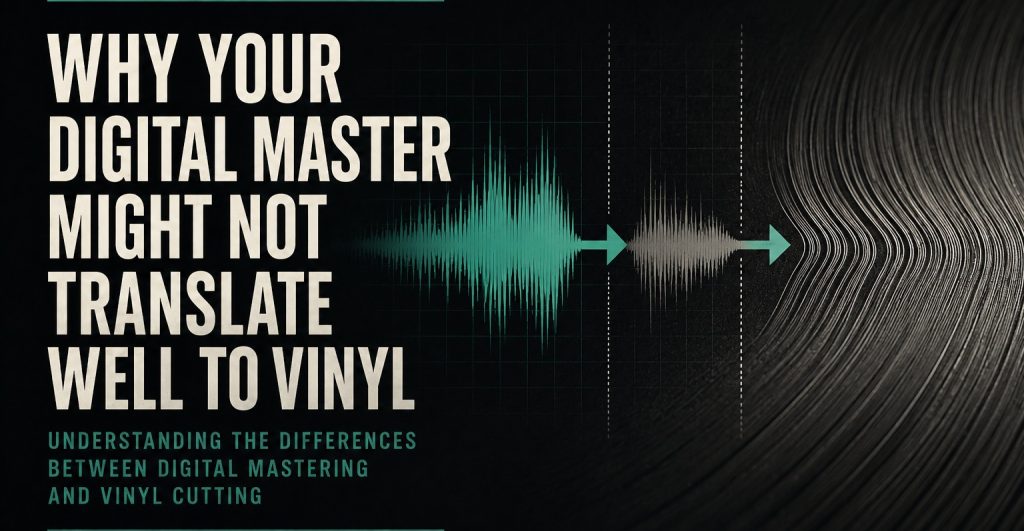
Vinyl has made a huge comeback over the last few years, with more artists, labels and producers choosing to release their music on a physical format again.
However, one thing many people don’t realise is that a master designed for streaming platforms is not always ideal for vinyl cutting.
Modern digital masters are often heavily limited, clipped and pushed for loudness. While this may work well on streaming services, vinyl behaves very differently as a physical format and can expose issues that may not be obvious in the digital world.
At Compound Audio, one of the most common things we see is clients sending “release-ready” digital masters for vinyl cutting that actually need additional preparation before they are suitable for the format.
Vinyl Is A Physical Format
Unlike digital playback, vinyl is created by physically cutting audio information into a lacquer or polycarbonate disc using a cutting stylus.
This means the audio must physically translate into groove movement.
When a master is overly compressed or heavily limited, the waveform contains sustained energy with very little movement or dynamic variation. This can create problems during the cutting process and sometimes during playback too.
A loud digital master may sound exciting online, but on vinyl it can sometimes lead to:
- distortion
- harsh top end
- reduced depth and openness
- groove tracking issues
- exaggerated sibilance
- inner groove distortion
- a flat or fatiguing sound
This is especially true when excessive clipping and limiting have removed too much transient information from the music.
Loudness Isn’t Always Better For Vinyl
In the streaming era, louder masters have become extremely common.
Many mixes are pushed hard through clippers and limiters to maximise perceived loudness. While this can create an aggressive and energetic sound digitally, it does not always translate well when preparing audio for vinyl.
Vinyl generally benefits from a little more space, movement and dynamic information.
When a master becomes too “brickwalled”, the cutter head is being asked to cut very dense and sustained information continuously. In some cases, this can result in distortion, reduced clarity or playback issues once transferred onto vinyl.
This does not mean vinyl masters need to sound quiet or weak.
It simply means the audio often benefits from being prepared specifically for the format rather than using a one-size-fits-all digital master.
What Is Vinyl Mastering?
Vinyl mastering is the process of preparing audio specifically for vinyl cutting.
Depending on the source material, this may involve subtle or more involved adjustments to improve how the audio translates onto the record.
Typical adjustments may include:
- reducing excessive limiting or clipping
- controlling harsh high frequencies
- managing sibilance
- improving low-end mono compatibility
- controlling aggressive transients
- adjusting overall dynamics
- preparing suitable levels for cutting
- optimising track spacing and side length considerations
In many cases, only small changes are needed.
The goal is not to completely change the track’s sound, but to preserve the energy and emotion of the music while improving its performance on vinyl.
Not All Lathe Cutting Services Offer This
One thing many artists discover too late is that not all vinyl cutting or lathe cutting services provide dedicated vinyl mastering or audio preparation.
In many cases, the supplied file is simply cut as-is. If the source audio already contains issues, there is often only so much that can be done during the cutting stage.
At Compound Audio, we offer dedicated vinyl preparation and vinyl mastering services designed specifically to help optimise digital masters for vinyl formats.
This service is available whether you choose to cut with us or not.
So if you already have a loud digital master but want to improve how it translates to vinyl, we can help prepare the audio before it reaches the cutting stage.
Preparing Your Music Properly Makes A Difference
A well-prepared vinyl master can help improve clarity, depth, balance and overall playback performance.
More importantly, it can help avoid unnecessary issues that may only become obvious after the record has already been cut.
Every project is different, and there is no single rule that applies to every track. Some music translates perfectly with minimal adjustment, while other projects benefit greatly from dedicated vinyl preparation. The important thing is understanding that vinyl is its own format, and treating it that way often leads to better results.
Need Help Preparing Audio For Vinyl?
At Compound Audio we offer dedicated vinyl mastering and audio preparation services for artists, labels and independent releases.
Whether you need a full vinyl pre-master, help optimising an existing digital master, or lathe cut dubplates prepared correctly for the format, we’re happy to help or give you feedback.
You can get in touch via the website to discuss your project, or click here
